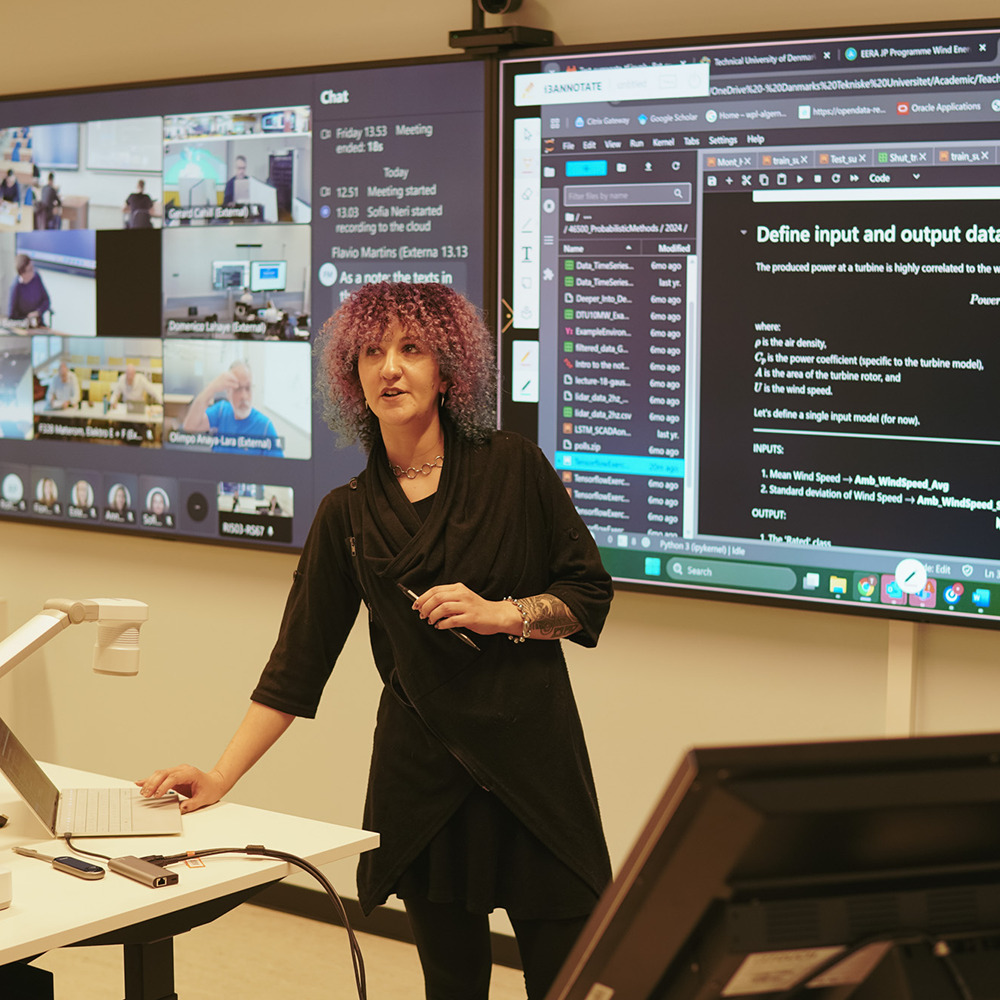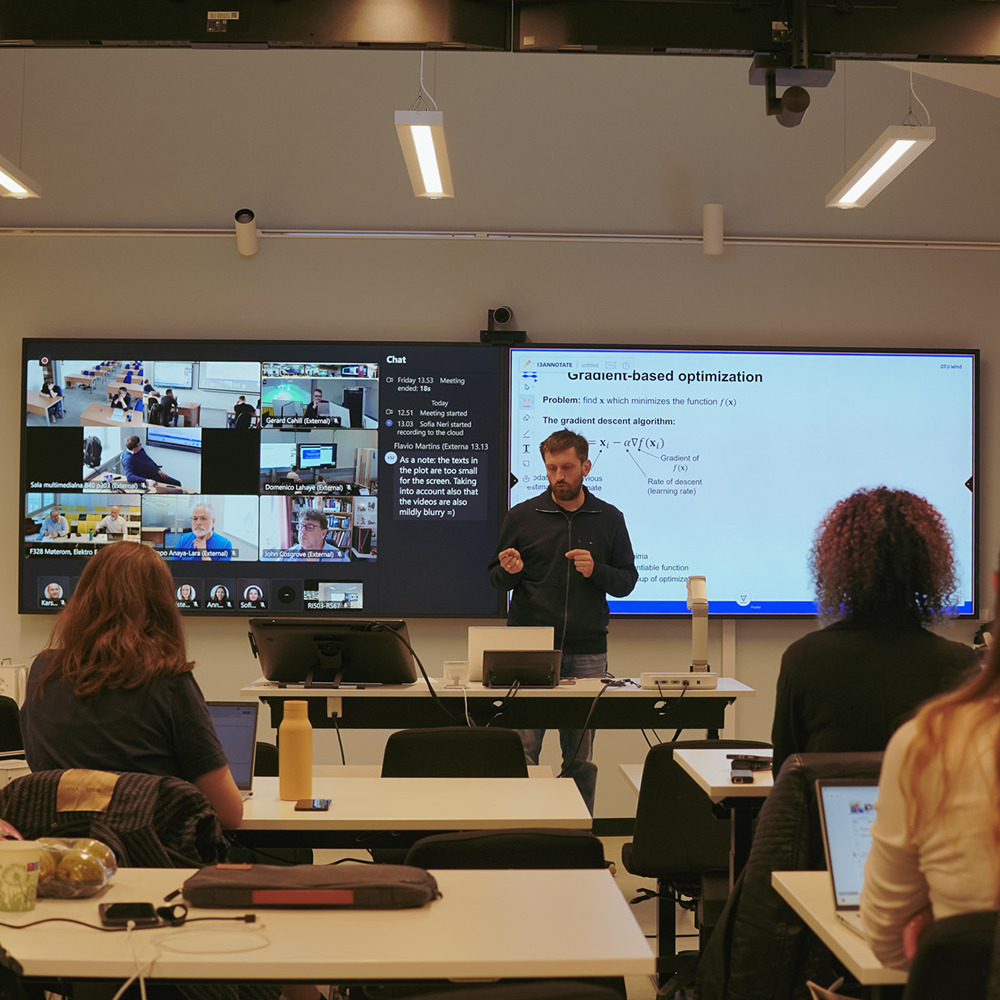
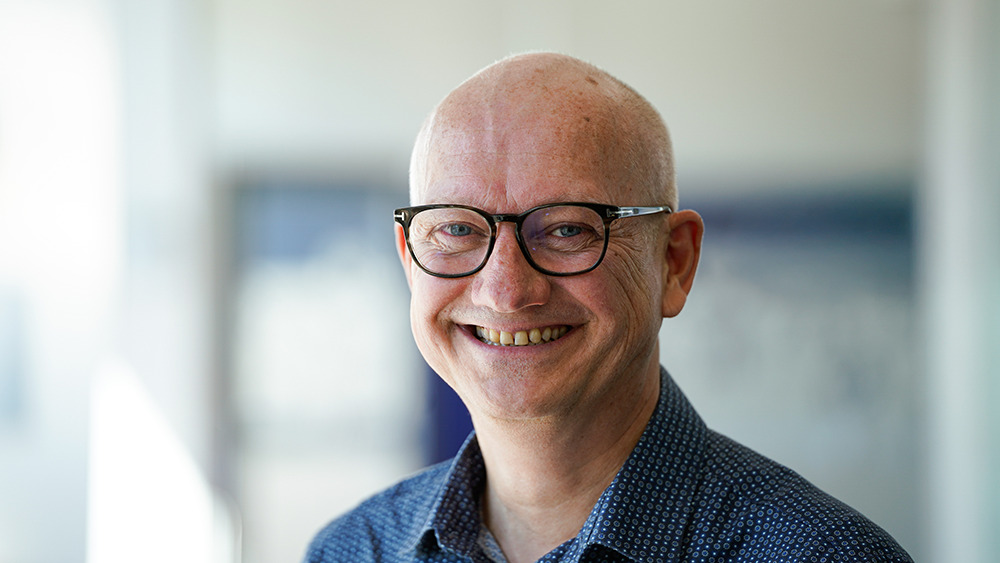
– a conversation with Karsten Kryger, DTU Wind & Energy Systems
At ANE, we often return to the same question: how do we make sure skills keep pace with a labour market that is changing faster than ever?
To explore this, I sat down with Karsten Kryger, Senior Executive Officer and coordinator for lifelong learning at DTU Wind & Energy Systems.
Close to industry – and real needs

DTU Wind & Energy Systems works across the full spectrum of the energy transition, from wind turbine technology to how renewable energy is integrated into energy systems. What stands out is how closely the institute works with industry – through research, testing of equipment, materials and turbines, software solutions, education and long-running partnerships.
Lifelong learning is an integral part of this setup. DTU offers formal programmes such as a Master of Wind Energy, alongside online courses and tailored training for professionals already working in the sector. Often, the goal is to support transitions, for example, from oil and gas into renewables.
Skills are moving targets
One of the clearest messages from the conversation is how quickly competence needs to change in these years.
“What was relevant a year ago is not necessarily sufficient today”, Karsten explains.
AI is a central part of this shift. A recent DigiWind study (2024–25) identified scientific programming and numerical modelling as highly demanded skills in the sector. Today, generative and agentic AI would likely be added to that list.
At the same time, domain expertise remains critical, particularly the ability to interpret and validate AI-generated results.
Beyond the technical domain, external developments, from energy security to global supply chains, are adding further pressure. Competence needs are not only evolving; they are doing so unpredictably and at speed. For instance, cybersecurity skills are likely to be even more important tomorrow than they are today.
Lifelong learning – and the barriers we still face
This makes the discussion about lifelong learning more concrete. It is no longer just about recognising its importance, but about whether current systems can actually respond.
Karsten emphasises that collaboration with industry is already strong:
“We are grateful for the close interaction with industry on course development and for the very positive feedback on our new offerings.”
“Guest speakers from industry bring deep insights into our courses—this collaboration is invaluable.”
There is broad agreement on the need for continuous upskilling, and important steps have already been taken. But significant barriers remain.
One challenge lies in the dialogue between industry and universities. As Karsten points out:
“Industry does not really have a clear way of communicating its competence needs to universities, and many companies lack internal structures to identify and articulate skills gaps.”
As a result, universities often receive few direct requests — even when they have the capacity to respond.
At the same time, structural barriers persist. National regulatory frameworks still make it difficult to build flexible learning pathways. Accreditation rules and programme structures are not designed for short, modular or combined formats, the very formats professionals increasingly need.
“We want to offer more flexibility. But regulatory frameworks, often designed for a different time, are holding this back,” Karsten notes.
At the European level, there is growing focus on micro-credentials and more flexible learning models. But progress depends on national implementation. Without more flexibility at that level — and stronger follow-through on European ambitions — change risks moving too slowly.
The DigiWind project is a concrete attempt to move in this direction, working with stackable micro-credentials and flexible pathways. But here too, regulatory and structural barriers are a constant challenge.
So where does that leave us?
What I take away from the conversation is that we are not starting from scratch. There is awareness, there are good examples, and there is a shared sense of urgency.
At the same time, there is still a gap between ambition and what works in practice.
If competence needs continue to shift at this pace, lifelong learning cannot remain something that sits alongside the system. It must be part of how the system works. That means making it easier for people to move in and out of learning throughout their careers – and ensuring that education offers can adapt more quickly to what is happening in industry.
It also points to the need for better alignment between national frameworks and European ambitions. Not in a big, abstract sense, but in quite practical terms: how learning pathways are designed, how they can be combined, and how accessible they are for people already in work.